
Gantt Chart Template For Goal Setting And Tracking
“`html
Gantt Chart Template for Goal Setting and Tracking
Goal setting is a cornerstone of success, whether in personal or professional endeavors. However, setting goals is only half the battle. Equally crucial is having a robust system for tracking progress and ensuring timely completion. Enter the Gantt chart, a visual project management tool that provides a clear and intuitive roadmap for achieving your objectives.
What is a Gantt Chart?
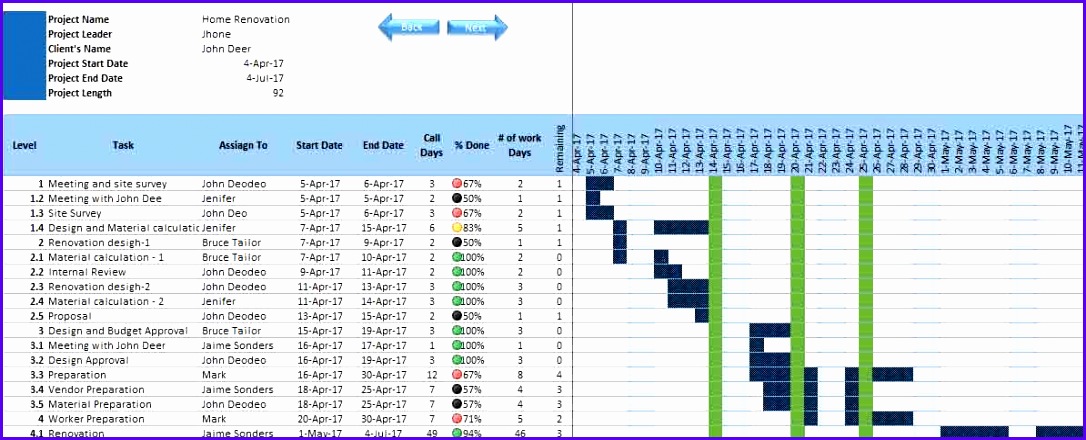
A Gantt chart is a type of bar chart that illustrates a project schedule. It lists the tasks to be performed on the vertical axis and the time intervals on the horizontal axis. Each task is represented by a horizontal bar whose length corresponds to the task’s duration. The chart also displays the start and end dates of each task, dependencies between tasks, and milestones.
Benefits of Using a Gantt Chart for Goal Setting and Tracking
Using a Gantt chart to plan and track your goals offers numerous advantages:
- Visual Clarity: Gantt charts provide a visual representation of your goals, breaking them down into smaller, manageable tasks. This clarity helps you understand the scope of the project and the resources required.
- Improved Time Management: By clearly outlining the start and end dates of each task, Gantt charts promote effective time management. You can allocate time wisely and avoid procrastination.
- Enhanced Prioritization: Gantt charts allow you to prioritize tasks based on their importance and dependencies. This ensures that critical tasks are completed on time, and potential bottlenecks are identified early.
- Dependency Identification: Gantt charts visually represent the dependencies between tasks, highlighting which tasks must be completed before others can begin. This prevents delays and ensures a smooth workflow.
- Progress Tracking: Gantt charts allow you to track the progress of each task in real-time. You can easily see which tasks are on schedule, behind schedule, or completed.
- Resource Allocation: Gantt charts help you allocate resources effectively by visualizing the tasks that require specific resources and the time frame in which those resources are needed.
- Improved Communication: Gantt charts facilitate clear communication among team members by providing a shared understanding of the project schedule, tasks, and responsibilities.
- Early Problem Detection: By monitoring progress against the planned schedule, Gantt charts enable you to identify potential problems or delays early on. This allows you to take corrective action before they escalate and impact the overall project timeline.
- Increased Accountability: Assigning tasks to specific individuals on the Gantt chart promotes accountability and ownership. Team members are more likely to complete their assigned tasks on time when they are clearly visible on the project schedule.
Key Components of a Gantt Chart Template
A basic Gantt chart template typically includes the following components:
- Task List: A list of all the tasks required to achieve your goal, broken down into smaller, manageable steps.
- Start Date: The date when each task is scheduled to begin.
- End Date: The date when each task is scheduled to be completed.
- Duration: The estimated time required to complete each task.
- Dependencies: The relationships between tasks, indicating which tasks must be completed before others can begin.
- Assignee: The person responsible for completing each task.
- Progress: A visual representation of the percentage of completion for each task.
- Milestones: Significant checkpoints or achievements along the path to your goal.
Creating a Gantt Chart for Goal Setting and Tracking
Creating a Gantt chart can be done manually using spreadsheet software like Microsoft Excel or Google Sheets, or you can use dedicated project management software like Asana, Trello, or Microsoft Project. Here’s a step-by-step guide:
- Define Your Goal: Clearly define your goal and break it down into smaller, actionable tasks. Be as specific as possible.
- List the Tasks: Create a comprehensive list of all the tasks required to achieve your goal. Organize these tasks logically.
- Estimate Task Durations: Estimate the amount of time required to complete each task. Be realistic and consider potential challenges.
- Identify Dependencies: Determine the relationships between tasks. Which tasks must be completed before others can begin?
- Assign Tasks: Assign each task to a specific individual or team.
- Set Start and End Dates: Determine the start and end dates for each task, taking into account the dependencies and estimated durations.
- Create the Chart: Use spreadsheet software or project management software to create the Gantt chart. Enter the task list, start and end dates, and dependencies.
- Visualize Progress: Update the progress of each task regularly. This will provide a visual representation of your progress towards your goal.
- Monitor and Adjust: Regularly monitor the Gantt chart to identify potential delays or problems. Adjust the schedule as needed to keep the project on track.
Example: Using a Gantt Chart to Plan a Website Launch
Let’s say your goal is to launch a new website. Here’s how you might use a Gantt chart:
- Task List:
- Define website requirements
- Design website layout
- Develop website content
- Build website backend
- Develop website frontend
- Test website
- Deploy website
- Promote website
- Start/End Dates: Each task would have a defined start and end date, calculated based on dependencies and estimated durations.
- Dependencies: For example, “Develop website content” depends on “Define website requirements.”
- Assignee: Each task would be assigned to a specific team member (e.g., designer, developer, content writer).
- Progress: The Gantt chart would be updated regularly to reflect the progress of each task.
Conclusion
A Gantt chart template is a powerful tool for goal setting and tracking. By providing a visual representation of your project schedule, it helps you manage time, prioritize tasks, identify dependencies, track progress, and improve communication. Whether you’re working on a personal project or managing a large team, using a Gantt chart can significantly increase your chances of achieving your goals on time and within budget.
“`
 829×640 goal tracking chart template printable templateroller from www.templateroller.com
  0 x 0 gantt chart excel template teamgantt from www.teamgantt.com
  1086×440 excel template gantt chart excel templates from www.exceltemplate123.us
 Thank you for visiting Gantt Chart Template For Goal Setting And Tracking. There are a lot of beautiful templates out there, but it can be easy to feel like a lot of the best cost a ridiculous amount of money, require special design. And if at this time you are looking for information and ideas regarding the Gantt Chart Template For Goal Setting And Tracking then, you are in the perfect place. Get this Gantt Chart Template For Goal Setting And Tracking for free here. We hope this post Gantt Chart Template For Goal Setting And Tracking inspired you and help you what you are looking for.
Gantt Chart Template For Goal Setting And Tracking was posted in December 6, 2025 at 1:11 am. If you wanna have it as yours, please click the Pictures and you will go to click right mouse then Save Image As and Click Save and download the Gantt Chart Template For Goal Setting And Tracking Picture.. Don’t forget to share this picture with others via Facebook, Twitter, Pinterest or other social medias! we do hope you'll get inspired by SampleTemplates123... Thanks again! If you have any DMCA issues on this post, please contact us!