
How To Teach Your Child To Read At Home
Helping Your Child Discover the Joy of Reading: A Home-Based Guide
Reading is a fundamental skill that opens doors to countless opportunities. As a parent, you play a pivotal role in nurturing your child’s literacy journey from a young age. This guide provides practical tips and strategies to help you effectively teach your child to read at home, fostering a love of books and a lifelong appreciation for language.
Creating a Reading-Rich Environment
Before formal instruction begins, immerse your child in a world of words. A reading-rich environment is crucial for developing pre-literacy skills and sparking curiosity about books.
- Read Aloud Regularly: This is the single most important thing you can do. Choose age-appropriate books with engaging illustrations and expressive language. Use different voices for characters, point to the words as you read, and encourage your child to participate by making sounds, pointing at pictures, and asking questions. Aim for at least 15-20 minutes of reading aloud each day.
- Make Books Accessible: Surround your child with books. Create a cozy reading nook with comfortable seating and shelves filled with books of various genres and reading levels. Rotate the books regularly to keep things fresh and interesting.
- Visit the Library: Make regular trips to the library a family outing. Let your child choose books that interest them. Library story times and other programs can also be valuable resources.
- Integrate Reading into Daily Life: Point out words in your environment – signs, labels, menus. Read aloud recipes while cooking, instructions while building something, or even the captions on television.
- Be a Reading Role Model: Let your child see you reading. Talk about what you’re reading and why you enjoy it. Your enthusiasm for reading will be contagious.
Building Foundational Skills: The Building Blocks of Reading
Before your child can decode words, they need a solid foundation of pre-reading skills.
- Phonological Awareness: This is the ability to recognize and manipulate the sounds in spoken language. It’s a crucial predictor of reading success. Activities to develop phonological awareness include:
- Rhyming: Play rhyming games. Read rhyming books. Ask your child to identify words that rhyme.
- Alliteration: Focus on words that begin with the same sound. “Silly snakes slither slowly.”
- Syllable Segmentation: Clap out the syllables in words (e.g., “but-ter-fly” has three syllables).
- Phoneme Isolation: Identify the individual sounds in a word (e.g., the first sound in “cat” is /k/).
- Phoneme Blending: Blend individual sounds together to form a word (e.g., /k/ /a/ /t/ makes “cat”).
- Phoneme Segmentation: Break down a word into its individual sounds (e.g., “dog” is /d/ /o/ /g/).
- Phoneme Manipulation: Change sounds in words to create new words (e.g., change the /k/ in “cat” to /b/ to make “bat”).
- Letter Recognition: Help your child learn to recognize the letters of the alphabet, both uppercase and lowercase. Use flashcards, alphabet books, and games. Sing the alphabet song together.
- Print Awareness: Help your child understand how print works. This includes:
- Knowing that print carries meaning.
- Understanding the directionality of print (reading from left to right and top to bottom).
- Recognizing the difference between letters, words, and sentences.
- Knowing that spaces separate words.
- Vocabulary Development: Expose your child to a wide range of words. Talk about the meaning of words and use them in different contexts. Read aloud from books with rich vocabulary.
Introducing Phonics: Connecting Sounds to Letters
Phonics is the method of teaching reading that focuses on the relationship between letters and sounds. Once your child has a solid foundation of phonological awareness and letter recognition, you can begin introducing phonics.
- Start with Simple Sounds: Begin with the most common consonant and vowel sounds. Focus on short vowel sounds (a, e, i, o, u) before introducing long vowel sounds.
- Teach Letter-Sound Correspondences: Use flashcards, games, and worksheets to help your child learn the sounds that each letter makes.
- Blending Sounds: Once your child knows a few letter-sound correspondences, begin blending them together to form words (e.g., c-a-t = cat). Start with simple CVC (consonant-vowel-consonant) words.
- Segmenting Sounds: Encourage your child to break down words into their individual sounds (e.g., the sounds in “dog” are /d/ /o/ /g/).
- Use Decodable Readers: Decodable readers are books that contain mostly words that your child can sound out using their phonics knowledge. These books provide opportunities for your child to practice their phonics skills and build confidence.
- Multisensory Learning: Engage multiple senses to help your child learn phonics. Use letter tiles, magnetic letters, or sand to form words. Encourage your child to write the letters and words as they sound them out.
Building Fluency: Reading Smoothly and Accurately
Fluency is the ability to read smoothly, accurately, and with expression. It’s essential for comprehension. Once your child can decode words, focus on building their fluency.
- Repeated Reading: Have your child read the same passage multiple times. This helps them to become more familiar with the words and to read them more quickly and accurately.
- Choral Reading: Read aloud together with your child. This can help them to learn the rhythm and intonation of reading.
- Reader’s Theater: Assign roles in a play and have your child read their lines. This is a fun and engaging way to practice fluency and expression.
- Timed Readings: Time your child as they read a passage. Encourage them to read faster and more accurately each time. Focus on improvement, not just speed.
Nurturing Comprehension: Understanding What You Read
Comprehension is the ability to understand what you read. It’s the ultimate goal of reading. From the very beginning, focus on helping your child understand what they are reading.
- Ask Questions: Ask your child questions about the books you read together. “What is this story about?” “Who are the characters?” “What happened in the beginning, middle, and end?” “How did the characters feel?”
- Make Predictions: Ask your child to predict what will happen next in the story.
- Summarize the Story: Ask your child to retell the story in their own words.
- Make Connections: Help your child connect the story to their own experiences and to the world around them.
- Visualize: Encourage your child to create mental images of the characters, settings, and events in the story.
- Discuss the Author’s Purpose: Talk about why the author wrote the book. Was it to entertain, inform, or persuade?
Making Learning Fun and Engaging
Reading should be enjoyable. If your child is not having fun, they are less likely to be motivated to learn. Incorporate games, activities, and rewards to make learning to read a positive experience.
- Play Reading Games: Use board games, card games, and online games to reinforce reading skills.
- Use Technology: Educational apps and websites can be a great way to supplement your teaching.
- Offer Rewards: Reward your child for their effort and progress. This could be a sticker, a small toy, or extra playtime.
- Be Patient and Encouraging: Learning to read takes time and effort. Be patient with your child and offer them lots of encouragement. Celebrate their successes and help them to overcome their challenges.
Important Considerations
- Start Early, But Don’t Rush: You can begin exposing your child to reading from a young age, but don’t pressure them to learn before they are ready. Every child learns at their own pace.
- Keep it Short and Sweet: Young children have short attention spans. Keep your reading sessions short and focused.
- Be Flexible: Adapt your teaching methods to your child’s individual needs and learning style.
- Consult with Professionals: If you have concerns about your child’s reading development, talk to their pediatrician or a reading specialist.
- Focus on the Joy of Reading: Remember that the ultimate goal is to foster a love of reading. Make reading a positive and enjoyable experience for your child.
By creating a reading-rich environment, building foundational skills, introducing phonics, and nurturing comprehension, you can effectively teach your child to read at home and set them on a path to a lifetime of learning and enjoyment.
 700×466 steps teach child read home diy tag from diytag.com
 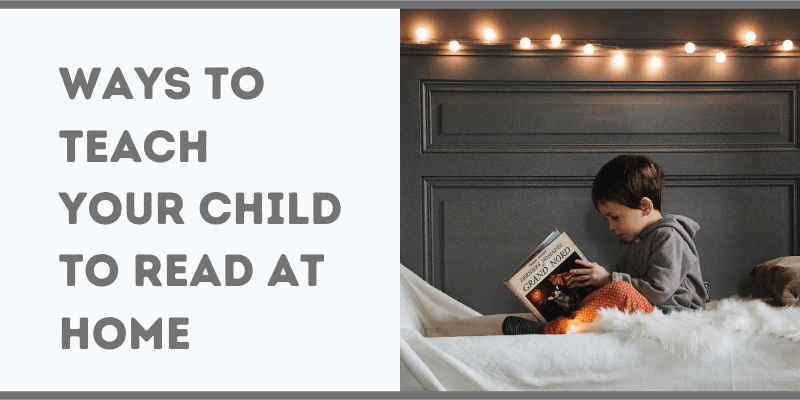 800×400 ways teach child read home kidlocom from www.kidlo.com
  474×711 teach child read home from funlearningforkids.com
  729×1030 teach homeschooled child read easy lessons from tinasdynamichomeschoolplus.com
  1024×684 teaching child read home sonlight from blog.sonlight.com
  725×450 teach reading large family simple living mama from simplelivingmama.com
  1280×960 teach child read home mummascribbles from mummascribbles.com
  735×1102 teach child read home parents from whatparentsask.com
  916×1600 teach child read teaching toddler read from 101teachchildtoread.blogspot.com
  600×776 teach child read home ways parents lionstory from lionstory.com
  650×1327 teach child read easy steps teach child from www.icanteachmychild.com
  1024×576 teach child read home effective steps from rukayya.com
  1200×979 teach child read easy steps lifelong lover from wehavekids.com
  719×1103 teach child read ultimate guide classroom key from www.theclassroomkey.com
  600×900 important steps teaching child read year homeschooling from www.yearroundhomeschooling.com
 Thank you for visiting How To Teach Your Child To Read At Home. There are a lot of beautiful templates out there, but it can be easy to feel like a lot of the best cost a ridiculous amount of money, require special design. And if at this time you are looking for information and ideas regarding the How To Teach Your Child To Read At Home then, you are in the perfect place. Get this How To Teach Your Child To Read At Home for free here. We hope this post How To Teach Your Child To Read At Home inspired you and help you what you are looking for.
How To Teach Your Child To Read At Home was posted in December 2, 2025 at 5:29 am. If you wanna have it as yours, please click the Pictures and you will go to click right mouse then Save Image As and Click Save and download the How To Teach Your Child To Read At Home Picture.. Don’t forget to share this picture with others via Facebook, Twitter, Pinterest or other social medias! we do hope you'll get inspired by SampleTemplates123... Thanks again! If you have any DMCA issues on this post, please contact us!