
Google Sheets Gantt Chart Template Weekly
“`html
Google Sheets Gantt Chart Template: Weekly View
Managing projects effectively requires meticulous planning and clear visualization of tasks, timelines, and dependencies. A Gantt chart is an invaluable tool for achieving this, providing a graphical representation of a project schedule. Google Sheets offers a readily accessible platform to create and utilize Gantt charts, including templates specifically designed for weekly project management.
Why a Weekly Gantt Chart in Google Sheets?
The weekly Gantt chart format is particularly useful for projects with short to medium-term durations where tracking progress on a week-by-week basis is crucial. It provides a granular view of tasks, allowing for proactive identification of potential roadblocks and ensuring timely completion. Using Google Sheets for this purpose offers several advantages:
- Accessibility: Google Sheets is a cloud-based application, making it accessible from any device with an internet connection. This facilitates seamless collaboration among team members, regardless of their location.
- Collaboration: Multiple users can simultaneously access and edit the spreadsheet, enabling real-time updates and collaborative project management.
- Cost-Effective: Google Sheets is free to use with a Google account, making it an ideal option for individuals and small businesses seeking a cost-effective project management solution.
- Customization: While the templates provide a foundation, users can easily customize them to meet the specific requirements of their projects. This includes adding new tasks, adjusting timelines, and modifying the visual presentation.
- Integration: Google Sheets integrates seamlessly with other Google Workspace applications, such as Google Calendar and Google Docs, streamlining project workflows.
Understanding the Google Sheets Gantt Chart Template (Weekly)
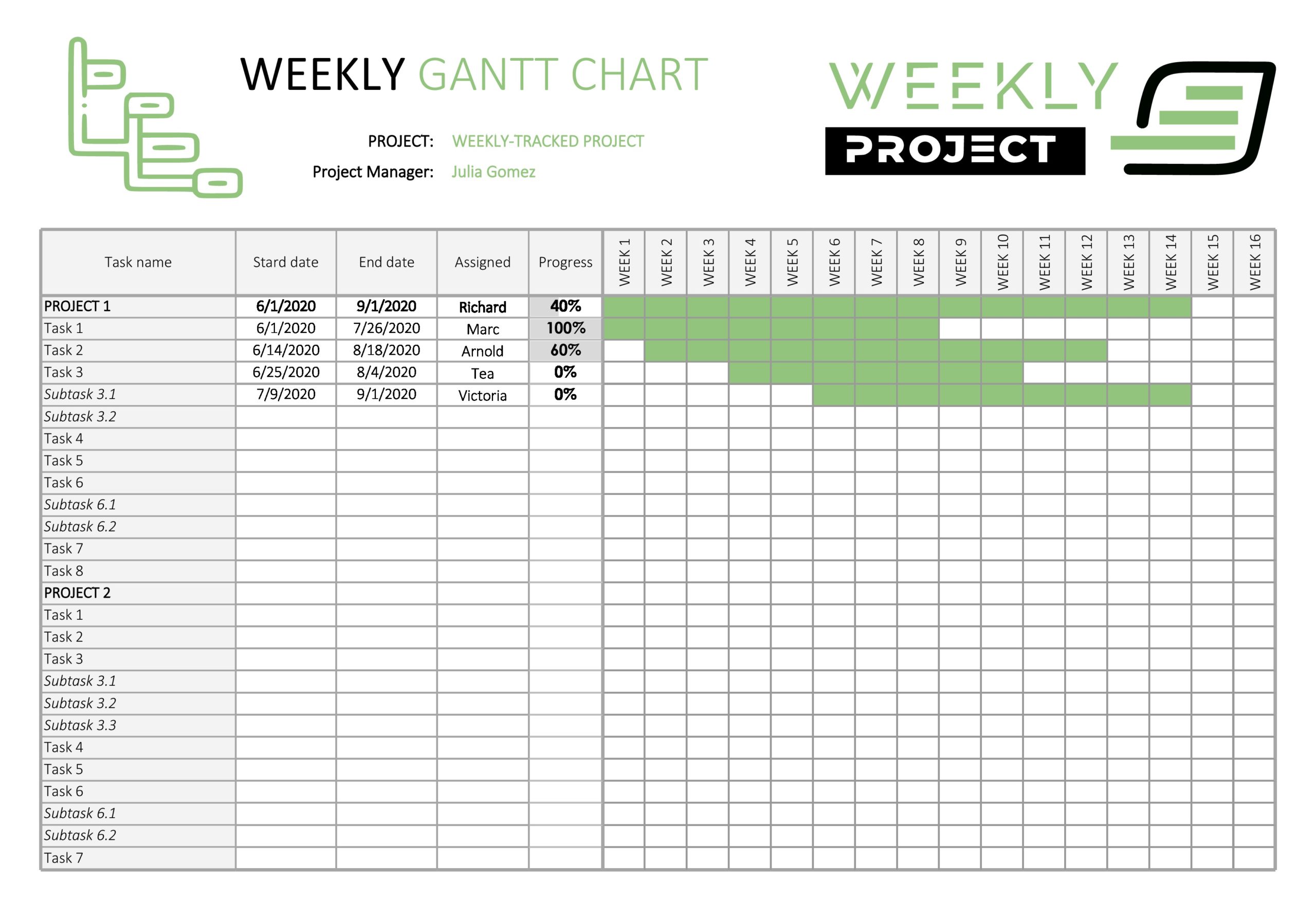
A typical weekly Gantt chart template in Google Sheets consists of the following key elements:
- Task List: A column listing all the individual tasks required to complete the project. Each task should be clearly defined and easily understandable.
- Start Date: A column indicating the planned start date for each task.
- End Date: A column indicating the planned end date for each task.
- Duration (Weeks): A calculated column showing the duration of each task in weeks, derived from the start and end dates.
- Dependencies: A column to specify any dependencies between tasks. This indicates which tasks must be completed before others can begin. This helps visualise the critical path.
- Assignee: A column indicating the person responsible for completing each task. This enhances accountability and facilitates effective task delegation.
- Status: A column to track the progress of each task. Common status options include “Not Started,” “In Progress,” “Completed,” and “Blocked.”
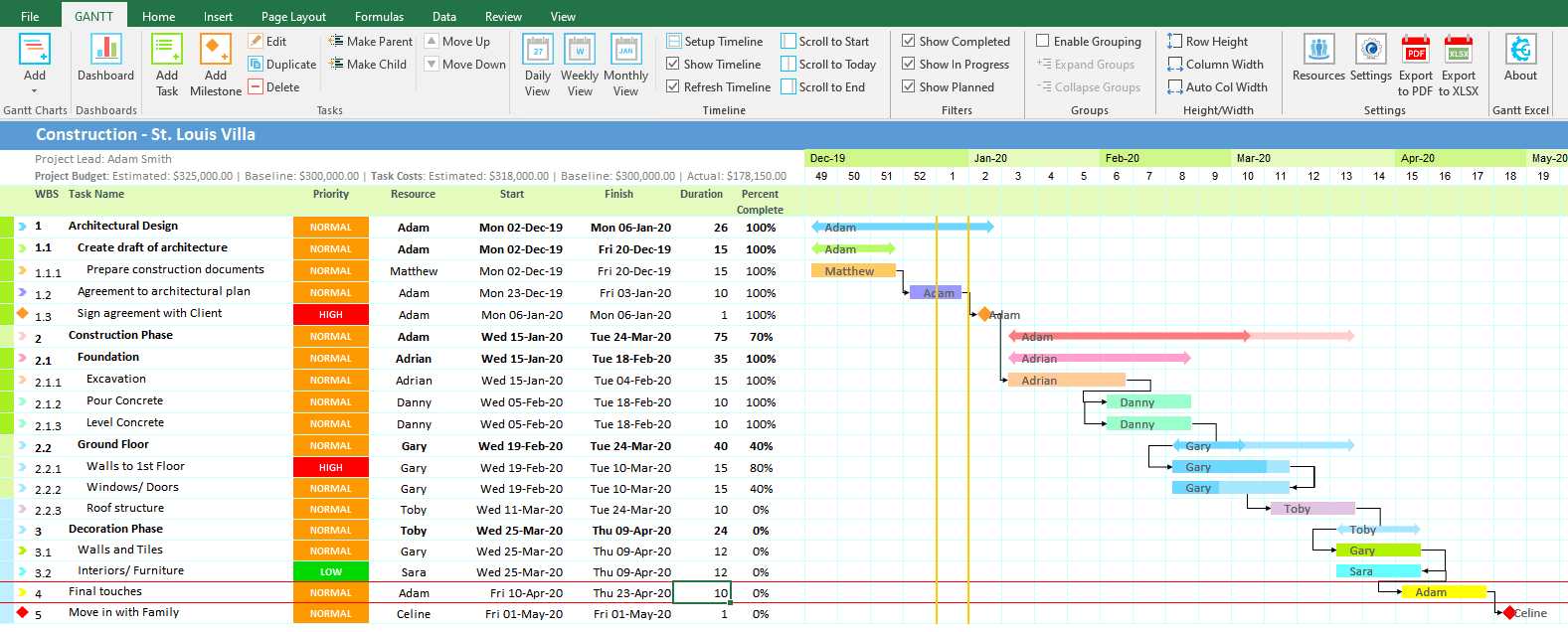
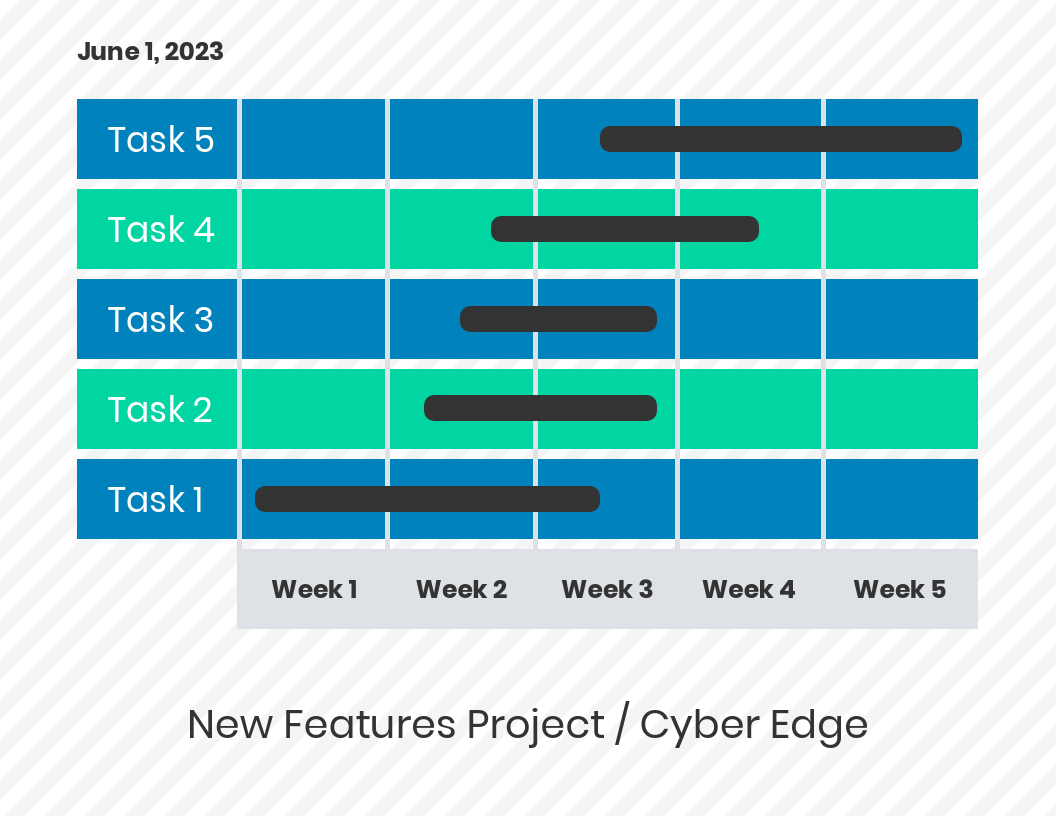
- Gantt Chart Visualization: The core of the template is the visual representation of the project schedule. This is typically a horizontal bar chart where each bar represents a task, and its length corresponds to the task’s duration. The position of the bar indicates the task’s start and end dates. The weekly view enables a more detailed and granular insight into the workflow.
Customizing the Weekly Gantt Chart Template
While the default templates offer a solid foundation, customization is essential to tailor them to your specific project needs. Here are some common customizations:
- Adding/Removing Columns: You can add columns to include additional information, such as task priority, budget allocation, or risk assessment. Conversely, you can remove columns that are not relevant to your project.
- Adjusting Formatting: Modify the font styles, colors, and cell borders to enhance readability and visual appeal. Use conditional formatting to highlight critical tasks or tasks that are behind schedule.
- Defining Dependencies: Properly define task dependencies to accurately reflect the project’s critical path. Use formulas or data validation to ensure the dependencies are correctly linked.
- Implementing Progress Tracking: Use data validation to create a dropdown list for the status column, allowing for easy updating of task progress. Consider adding a percentage completion column for a more granular view of progress.
- Adding Milestones: Include milestones to mark significant achievements or key decision points in the project. Visually highlight milestones on the Gantt chart to provide a clear overview of project progress.
- Integrating with other Google Services: Using Google Apps Script, it’s possible to link the Gantt Chart to Google Calendar. Changes to the start and end dates automatically update the calendar, improving team awareness.
Best Practices for Using a Weekly Gantt Chart
To maximize the effectiveness of your weekly Gantt chart, consider these best practices:
- Start with a Clear Scope: Define the project’s objectives, deliverables, and scope before creating the Gantt chart. This will ensure that all necessary tasks are included.
- Break Down Tasks: Decompose large tasks into smaller, more manageable subtasks. This will make it easier to estimate durations and track progress.
- Estimate Accurately: Invest time in accurately estimating the duration of each task. Consider past experiences and potential challenges when making your estimates.
- Regularly Update the Chart: Update the Gantt chart regularly to reflect actual progress and any changes to the schedule. This will ensure that the chart remains an accurate representation of the project’s status.
- Communicate Effectively: Share the Gantt chart with all team members and stakeholders. Use it as a tool for communication and collaboration, fostering transparency and alignment.
- Monitor the Critical Path: Pay close attention to the critical path, which represents the sequence of tasks that directly affect the project’s completion date. Any delays to tasks on the critical path will impact the entire project schedule.
By leveraging the power of Google Sheets and a well-designed weekly Gantt chart template, you can effectively plan, track, and manage your projects, ensuring timely completion and successful outcomes.
“`
 0 x 0 google sheets gantt chart template teamgantt from www.teamgantt.com
  1577×636 weekly gantt chart gantt excel from www.ganttexcel.com
  1056×816 gantt chart weekly based template templates gantt chart from db-excel.com
  1170×658 gantt chart excel template google sheets compatible from spitmarket.com
  1056×816 gantt chart weekly template from lesboucans.com
  1920×631 create gantt charts google sheets couplerio blog from blog.coupler.io
  2560×1757 gantt chart templates excel templatearchive from templatearchive.com
 Thank you for visiting Google Sheets Gantt Chart Template Weekly. There are a lot of beautiful templates out there, but it can be easy to feel like a lot of the best cost a ridiculous amount of money, require special design. And if at this time you are looking for information and ideas regarding the Google Sheets Gantt Chart Template Weekly then, you are in the perfect place. Get this Google Sheets Gantt Chart Template Weekly for free here. We hope this post Google Sheets Gantt Chart Template Weekly inspired you and help you what you are looking for.
Google Sheets Gantt Chart Template Weekly was posted in December 20, 2025 at 9:43 pm. If you wanna have it as yours, please click the Pictures and you will go to click right mouse then Save Image As and Click Save and download the Google Sheets Gantt Chart Template Weekly Picture.. Don’t forget to share this picture with others via Facebook, Twitter, Pinterest or other social medias! we do hope you'll get inspired by SampleTemplates123... Thanks again! If you have any DMCA issues on this post, please contact us!